
 Blog
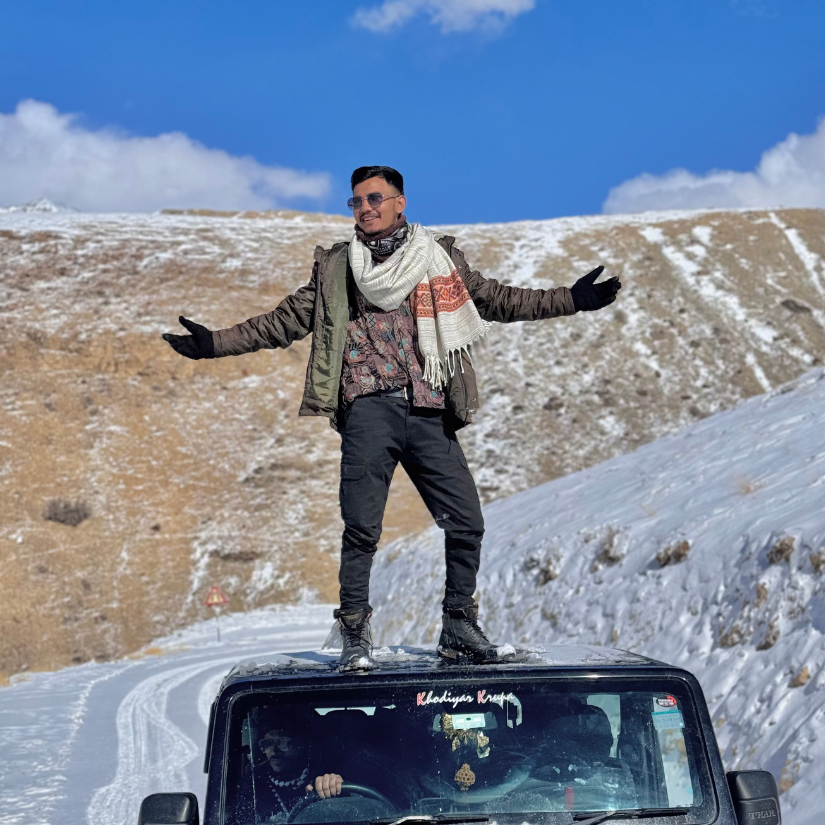
BlogSpiti Valley is more than just a travel destination — it is an experience that stays with you. What began as a personal 13-day road trip from Surat in a Mahindra Thar turned into a journey of discovery, connection, and transformation.
From the lively streets of Shimla to the peaceful charm of Chitkul, and from the ancient beauty of Tabo to the raw landscapes of Kaza, every part of the journey offers something unique.
But what truly makes Spiti special is not just its mountains or views — it’s the people, their simplicity, and the calm way of life that’s hard to find anywhere else.
Today, this journey is no longer just personal. It has become an experience that is shared with others — taking travelers through the same roads, stays, and emotions that once made this trip unforgettable.
Spiti is not just a place you visit — it’s a place you feel.
Spiti Valley – A Journey That Changed the Way I Travel
Spiti Valley is often described as cold, remote, and breathtaking. But for me, Spiti has never been just a destination. It is a feeling — one that stays long after the journey ends.
My first trip to Spiti started from Surat, driving all the way in my Mahindra Thar with no expectations, just a desire to explore. What was supposed to be a simple road trip turned into a 13-day journey that completely changed my perspective on travel.
Where It All Began – Shimla
Like most journeys to Spiti, mine began from Shimla — but it didn’t feel like just a stopover.
Those two days in Shimla were full of energy and comfort before stepping into the raw landscapes ahead. Mornings started with a visit to Jakhu Temple, and evenings were spent walking through the lively Mall Road.
But what truly stayed with me was the food.
From the soft momos at Krishna Bakery to freshly baked Swiss rolls, everything felt just right. And surprisingly, one of my favorite parts of Shimla became something unexpected — the cheese burst pizza at Domino’s. To this day, I haven’t found that same taste anywhere else. Every time I pass through Shimla now, it has become a ritual to stop and have it again.
The Road That Changes Everything
The real journey begins once you leave Shimla behind.
As you drive through Kufri and Narkanda, the landscape slowly starts shifting. The air feels different, the roads get quieter, and nature begins to take over.
Then comes the iconic Kinnaur Gate — a raw, dramatic entry carved straight into the mountains. It’s the kind of place that makes you pause, not because you have to, but because you want to take it all in Narkanda surprised me in the simplest way — fresh fruits like oranges and grapes that tasted unbelievably pure. Small roadside experiences like these often become the most memorable parts of the journey.
Chitkul – Where Time Slows Down
Eventually, the road leads you to Chitkul — the last inhabited village near the Indo-Tibet border.
And something changes the moment you arrive.
Life here moves slowly, and that’s exactly what makes it special. Sitting by the Baspa River, with nothing but the sound of flowing water, you begin to feel a kind of calm that is rare to find.
The village is simple, yet deeply warm. Over time, I built connections here — not just memories. There’s a little girl named Nandini who I meet every time I visit. It no longer feels like visiting a place; it feels like returning home
Into the Soul of Spiti – Nako and Tabo
As you move deeper, you reach Nako — a quiet village that almost feels frozen in time.
Its lake, surrounded by mountains, reflects a stillness that’s hard to explain.
Further ahead lies Tabo, home to one of the oldest monasteries in the Himalayas.Often called the “Ajanta of the Himalayas,” Tabo is not just a place you visit — it’s a place you experience. The ancient murals, painted using natural colors, and the meditation caves that date back centuries, carry a silence that speaks louder than words.
Dhankar and Kaza – The Heart of the Valley
The road then takes you to Dhankar Monastery — once the capital of Spiti.
Perched dramatically on a cliff, it stands as a reminder of the region’s history and resilience.Not far from here is Kaza — the present-day heart of Spiti.
Kaza is where you slow down, stay longer, and start connecting with the place. I usually stay with a local family here, and every time, it feels less like accommodation and more like being part of their home.
It’s in these small interactions — shared meals, conversations, and laughter — that you truly understand Spiti.
Higher Than Just Altitude – Hikkim, Komic, Langza
Exploring villages like Hikkim, Komic, and Langza is not just about reaching high places.
It’s about meeting people who live with less, yet feel more complete.
Spending time with monks, listening to their stories, and observing their way of life gives you a different perspective — one that stays with you long after the trip ends.
A Place Full of Mystery – Gue Monastery
One of the most unique stops is Gue Monastery.Here lies a 500-year-old naturally preserved mummy, still sitting in a meditation posture. It’s both fascinating and humbling at the same time.
And interestingly, your phone network often switches to China’s time zone here — a small reminder of how close you are to the border.
Kalpa – Where the Journey Becomes a Feeling
The journey eventually leads to Kalpa.Known as the land of Lord Shiva, Kalpa offers stunning views of the Kinnaur Kailash range.
I planned to stay here for a day — but ended up staying for three.
Because Kalpa is not a place you rush through. It’s a place you sit, observe, and absorb. Conversations with locals, slow walks through the village, and simply doing nothing — that’s what makes it special.
What Spiti Really Teaches You
Spiti is not just about landscapes.
It’s about people.
It’s about simplicity.
It’s about a life without unnecessary noise.
Here, you won’t find chaos or competition. You’ll find peace. You’ll find clarity.
And over time, I realized something very important —
Spiti is not beautiful because of its views. It is beautiful because of its people.
From a Solo Journey to Sharing the Experience
What started as a personal road trip has now become something much bigger.
Today, I take people to Spiti — not just to show them places, but to help them experience what I felt on my first journey.
The same roads, the same stays, the same raw beauty — but now shared with others.
Because Spiti is not meant to be rushed.
It’s meant to be felt.
If you’re someone who is not just looking to travel, but to truly experience a place —
Spiti Valley is waiting for you.
